Péter Mustó
Péter Mustó was born in 1935 in Derecce. Jesuit monk. In the spirit of the Second Vatican Council, his interest turned towards people of other religions, dissidents and the wounded of the welfare society. From 1979 to 1991 he lived and worked in a poor neighbourhood in Bogotá, South America. Since the regime change he has been leading meditation retreats in Hungary. He teaches prayer.
Péter Mustó is the author of several volumes. Reading his books is a refreshing, life-giving, cleansing experience. An invitation to freedom from self, to turn radically towards God.
"It is with love and appreciation that I think of Posticum and the spiritual work that is done there." Péter Mustó, 2016
He has held several retreats at Posticum, a friend of our house. He has written the foreword for two Posticum Books volumes: the Dalai Lama and the book by Ferenc Jálics.
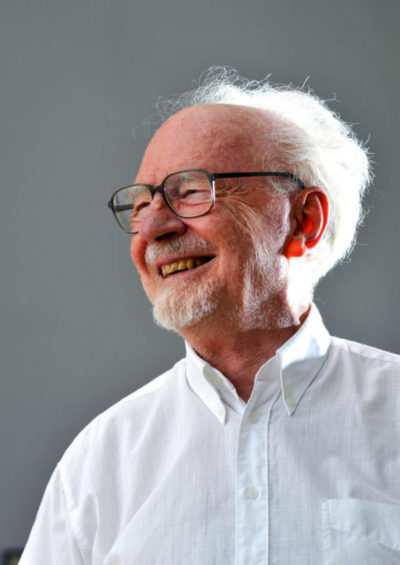
To recognise the living man in his face
CONVERSATION WITH PETER MUSTÓ SJ
I visited Jesuit Péter Mustó in his current location, in Manresa, Dobogókő, with the intention of interviewing him about eight decades of life and monastic service. The long conversation in a liberating, loving atmosphere turned out to be much more than that.
Perhaps the dear reader will feel the same.
Judit Ozsváth: The recognition of his vocation as a priest and monk is certainly a major milestone in his life. Please talk about it!
Péter Mustó: One thread may lead to Derecce, where I spent my childhood. My parents told me that I wanted to be a Chinese missionary when I was four. I must have heard about it in the church, where Jesuit fathers were conducting popular missions at the time. The date of the mission was also inscribed on a large cross in the parish church. It is likely that they were talking about the Jesuits going on a mission to China at the time, and for some reason this struck a chord with me. Derecske is not a large settlement, it was mainly populated by Reformed Christians, and the Catholics were a smaller community. My grandmother went to church regularly, she was Catholic. I suppose that when I was four years old, I was with her at the masses celebrated by the Jesuits. But I also suspect that there are much more subtle threads and influences on the maturation of my vocation that come from my parents, especially my mother. And my mother never told me to become a priest or a Jesuit, but she may have contributed to slowly strengthening in me the desire to serve God. At that time, one could imagine it mainly as a priest or a monk. I remember praying on my own as a child, I was never forced to do so. I liked to be alone, quiet, I liked to listen to God in silence. It was not the words, the truths or the scriptures that were important to me, but the presence of the Spirit. That's kind of how I can express it today. Maybe that is why I became a monk. And then later I always wondered how people ever think of becoming a priest or a monk. It's as if there is some capacity in the soul - more in one person, less in another - to turn to God. Somehow he realizes that there is a meaning to existence, that it is important to live, to serve people, to seek their good.
Then there was a time, when I was a priest, when I completely rejected the word "service" and even omitted it from the Mass, because I wanted to completely eliminate the relationship between master and servant. I thought of it in political, social terms, and only later did I confess that turning to God is really service.
At the beginning of our emigration to Germany, I lived in a Hungarian refugee camp and was the sacristan and "chichka" of a Hungarian priest from Transylvania. I brought him his lunch. Later he was the headmaster of the Hungarian school for a long time, and later the pastor of the Hungarians in Frankfurt. I spent more time with him, but that was not why I became a Jesuit and a priest. He gave me books, which I read. I realized afterwards that he only gave me such things and no one else. He probably saw things in me that I didn't even realize at the time. So he didn't make me a priest, and I didn't become a Jesuit because of Jesuits. It's likely that I became a Jesuit because of the Chinese Jesuit missionaries and because of Istvan Kasap. But these were only formulated for myself half a century later.
I am driven by my inner motivations, encounters, experiences, my interests determine where I go and where I go next. I experience inner guidance, and also that I am safe and protected on my voyage of discovery. Life itself protects. In religious terms I would say Providence. As if I am not choosing where to go, but something is calling me, sending me, guiding me. It is never violent, like a command in a psychotic state, never invites me to harm myself or others, and always respects my freedom. Is that the essence of a vocation?"
(Extract from Péter Mustó You love what's yours from a letter from South America in 1978, published in his book1)
O.J.: The life story reveals a high degree of social sensitivity, despite his bourgeois background. This is certainly the basis of his sympathy with liberation theology...
M. P.: Many people have grown up in civilian families who have become sensitive to the pain and problems of others. Perhaps I am not wrong in saying that Jesus of Nazareth was not really an outcast either, but came from a middle-class family, he could read and write, so he was not one of the poorest and most ignorant. I have a strong sympathy for Jesus, who was sensitive to people's pain and the injustices they suffered.
My social sensitivity, however, came from a very early age. My aunt, who was also my godmother and whom I still respect very much, had a maid, and she and Ilus lived together for seventy years. My aunt had two marriages in between, but Ilus always stayed by her side. As close as they were, the difference between them was palpable: my aunt considered herself a lady and Ilus only a servant. My aunt did not see any problem with this, but I later noticed that Ilus suffered a lot because of it. As a child, I felt a kind of visceral sympathy for Ilus and said that I would marry Ilus. I wasn't in love with her, she was much older than me, it was more her subordinate position to my aunt that made me feel close to her. There was a time when I asked my aunt why she locked her wardrobe, as it was an insult to Ilus. "It's because forty years ago she took one of my dresses out of there and tried it on herself," she said. So I viscerally condemned this social difference in my family. Why that was, I still don't know.
I studied philosophy in France, I was in training there for a long time, and most of the young people I studied with became worker priests. They moved to a poor part of the city and became quite simple factory workers and manual labourers, who did not live by the priestly job like most priests, but earned their living and served as priests in their spare time. And they appealed to St. Paul, who did not want to be a burden on the community, so he supported himself from his own manual labour, at least that is what he writes in his letter. He thought it was the right thing to do for the other disciples. It was also referred to by these worker-priests when they refused to accept the priest's social elevation. In our town, Derecce, the priests, along with the doctors and the judge, belonged to the social upper class. True, my mother told me that the parish priest of Derečke was a wealthy farmer who worked the land with his own hands. He only sent the altar boys to the May Day service, he worked the land. The workers' priest movement was of course linked to the social climate in which Marxism was born, which basically rejected social classes as castes. This is also my belief, which is that God created all men equal. There were many French among the worker priests. And when the Germans defeated France during World War II, they put soldiers and privates in separate prison camps and officers in separate prison camps. The priests were all in the officers' camp, there were none in the privates'. A great many French priests in this situation were confronted with the fact that priests belonged to a different social class, not to the common people. And it was from this idea that a branch of the workers' clergy movement was born. They argued that the church was distancing itself from the workers, not the workers from the church. And if we are to be the church for all and to take the gospel to all, then the church and the priests must be closer to the workers, not the other way around. The other was the small parish movement. The monasteries were big and rich. The simple friar may have been poor, but the monasteries had handsome wealth. Cluny in France, for example, was a huge, prosperous monastery for centuries, and its abbot hunted and politicked with kings and lords. These monasteries also conveyed a great deal of good, but at the same time the whole area around the monastery became atheistic, because the poor people also saw the monastery dwellers as their employers and oppressors.
The social sensitivity in me met the so-called liberation theology of the Church. It proclaimed, first of all, God's love for the poor. Jesus, in accepting death on the cross, was not identifying himself with the social ruling class, who could protect themselves, he knew full well that the poor needed protection. The poor of God are the poor of God.
In the Old Testament they were also saints in a way.I believe in a God who takes the least of these into account.
O.J.: Then came the years in Germany, when he worked as a youth pastor ...
M. P.: They wanted to send me from France to America to teach French in a high school. I was supposed to get a teaching diploma. I asked not to go. Even then I didn't want to work in an institution. Two years as an educator in a big school in France was enough for me for a lifetime. I acknowledge the need for institutions, including church institutions, but I also want those who run the institutions to accept that the gospel can be preached not only inside institutions but also outside them. When you are free to meet people who are not inside an institution, such as a school or an army.
As a youth pastor in Germany, young people would come to me on their own, and if the programme didn't suit them, they would run away. So we had to preach the Gospel to them in a way that we could get them to like it. In school, you don't have to get them to like it. I knew a respectable sister who said, "I don't care whether the children like it or not, they will understand in 30 years' time". I am sure there is some truth in that. I am not denying it, I am not questioning the institutions, I am just saying that there is another kind of faithfulness to the Gospel or preaching the Gospel that is outside the institution. Jesus himself is my role model in this, because he did not have institutions, he did not teach people in the synagogue, but went from village to village and preached the gospel to those he met. And he usually met those who were sinners, sick or poor or had some other problem. That is why he said that the poor were the ones to preach the gospel to. The gospel of God should be preached to those who are lacking something or who are hurting. Through the institutions of the church as a dominant part of society, we raise up people who then lobby for us. That is my vision. This may make people working in institutions feel accused, but I don't want to accuse. What I am saying is that the Church is an institution and there must be people in society who defend its interests. Because the church spreads the gospel. It is through the church that the gospel lives on. The very act of writing the story of Jesus in the gospel is the work of the institution.
So to continue the spirit of the Gospel, we need the institution, I needed and need this institution, and as a priest I am part of this institution, but I am not working within the institution and I am not working to strengthen the institution. The institution ordained me as a priest in order to reach out to the people to whom I can reach out and who will listen or who will come to me. And there have always been people who needed the priestly ministry that I have done. I was never unemployed and people always came to me, even though I was working outside institutions.
O.J.: This also meant driving against the traffic.
M. P.: (Laughs) My work in youth pastoral care was not accepted by everyone from the very first moment. And I did it not because I wanted to do something different from what I was used to, but because I couldn't do it better. I took no pleasure in doing it in a way that I was criticised. The German parents objected that I was a foreigner, the Jesuits objected that the children shouted when they played football. I had a lot of arguments with one of the Jesuit brothers in particular, who often challenged me about my loudness. I told him it was part of football. Then we were sent away from there. Then they started building a house on the place where my students played football. There was a terrible noise around the construction of the house, and I asked this Jesuit brother if it didn't bother him. He said no, because it was necessary. And the shouting of the children was not necessary. I hope that this brother - long dead - has since got used to the shouting of children in heaven and can tolerate more than just the noise of the machines.
So I was criticised for not being strict enough, not disciplined enough. I note that the same parents who complained came to me a few years later and said, "My child trusts you so much, can't you tell him that?" I began to realize then that there was another side to my lack of discipline and inability to discipline: that I took those young people very seriously. I had great respect for them, I mingled with them, I didn't want to be a big authority in front of them. But I didn't even fraternise with them. In a way, I could behave in a way that made them feel appreciated, valued. And then what I couldn't do, I gave them responsibility for. I didn't tell them what to do, we figured it out together. And of the young people I was with in 1965 - and that was more than fifty years ago. - many of them later supported my work in South America financially. Indeed, they have continued to support that work for nearly forty years. I celebrated my birthday with them last year. Not many of them became priests, only a few, but that was not why I did the work. In general they all turned out to be good and decent people.
We may have nothing to show for ourselves and others. But we are still alive, we still have a right to exist, we still have dignity. We deserve to be respected. It is not easy to be without a task or a purpose just because we are. It is difficult, yet free.
(Extract from Péter Mustó Life is born quietly from the book2)
I was a youth pastor in Munich for twelve years. Meanwhile the synodal spirit was alive and well, which divided the church. But this is not a new thing either, since St. Paul and St. Peter were already arguing with each other. And I don't think that's a bad thing. Different trends or struggles can be fruitful for each other.
In my own way, I fully accepted the openness of the synod. But within the diocese there was a certain backsliding: when the Archbishop died suddenly, the Auxiliary Bishop who governed the diocese wanted to put order in the youth centre where I was working. If only because he lived nearby, and the young people who came on motorbikes bothered him. So there were personal interests on his part. I resisted that arrangement and then I had to give up my job there.
O.J.: Was this the impetus for the trip to South America, which in fact fulfilled an old desire?
M. P.: I love the image of the mountains in the distance looking so beautiful and peaceful. I too thought that in South America the preaching of the gospel was much nicer, better and more radical and committed than I had seen here in rich Western Europe. I thought that the church in Latin America would be renewed.
O.J.: Did the statements of the Latin American bishops of the Synod contribute to this belief?
M. P.: Yes, these were also confirmed, as was the commitment of my fellow Jesuits, especially in Peru. Then I also went there to see for myself what the Church is creating for and with the poorest and most neglected populations. First I went for a year, travelled around, then back to Europe, spent a year as a worker priest in Berlin, and from there I went back to South America.
In Colombia, I first worked with the Salesians in a large institution founded by a Salesians father for street children in Bogotá. I worked in this institution for a while, then I became independent and moved to a poor neighbourhood. There I lived in a small apartment and worked with people who were working for the uplift of their own community.
Mostly what brought me to South America was that I felt that Europe was not realizing the Christianity I wanted, and I had the illusion that South America was more Christian than we were in Europe. In the late 60s, early 70s, living in Germany, I had this feeling. In Jesus, I saw first of all a God who reaches out to people, and interacts with people's personal faces and personal stories. Then, when I was there in South America, I realised that even there, and perhaps nowhere, we do not really live out a Christianity based on the spirit of the eightfold beatitude and the works of mercy found in Matthew 25. From this Gospel, I learned not only that Jesus was good to people, but that Christian worship is inseparable from the way we treat our fellow human beings. And it is precisely towards our fellow human beings who are a nuisance to us, who do not bring us fame or fortune, who do not shine in the sun, but towards those who are a nuisance, who are a nuisance to us.
And my critical vision was related to the difficulties of my prayer. I couldn't pray, I couldn't be focused, I couldn't really turn to God in a way that gave me the happy feeling that I was finding my happiness in Him. And then this agony and failure of my prayer led me to say to myself: "Peter, if you can't be holy, be good!" At least I tried to be good. But, as I said, there were times when that also caused problems for others. In Germany, it was a problem for the leaders of the diocese that I, as youth pastor, and my colleagues were reaching out to young people who were problematic. Because the church wanted to deal with educated youth who could become priests, who would lobby in society for the church and secure the church's place in society. And because our determination to deal with troubled youth was rejected, I decided to go to South America. At first I had no intention of reaching out to street children, the street children came to me on their own. They begged or attacked or were friendly as long as they hoped to get something. They didn't even need to be looked for, they imposed themselves on the well-meaning people on the street with their misery, their messiness, their dirtiness and their lack of discipline, and on me too, because I was a foreigner. And when they found out I was a priest, they came looking for me even more. I didn't reject them, I didn't want to see them as human trash. To see the human in them. Not the way they behaved that made them uncomfortable, not the way they proved to society that they were really bad and unlovable. A great many of them really were unlovable, but they were human beings, they had feelings, they had pain, they had mental and physical wounds. And then I was dealing with these young people in the Institute of the Salesians Fathers, which was set up exclusively for children living on the streets. I lived between the institute and the street. Many of them were under the age of ten, but there were also adolescents aged 12 to 16. There were also many who had already been in the institution but had been thrown out. And some wanted to go back again. I would talk to them, if they had wounds, I would take them to the hospital or to the doctor and pay for their care. I also accompanied some of them when they were looking for their parents. I travelled with them, paid their travel expenses, looked for their parents, but usually brought them back to the city, to the institution. It was important for me to have a personal contact, to recognize the living person in his face, and to recognize that this living person, however miserable and impulsive and repulsive, is not only a dear child and creature of God, but God is revealed in him. In him the face or image of Jesus or God is revealed. And I had to tell myself this over and over again. I had to tell myself that I am not the one who changes the world, and I cannot change the situation or the destiny of people, but if I see God in them or the one God loves in them, then they will be changed in some way. I did not know then that they could really change. At first it was failure after failure, but I was still looking for their personal face. I remembered from the gospel that Jesus met people in person. For example, the widow who threw her two pennies in the bushel was noticed by no one but him. I recalled the time the woman with the flowing blood touched the hem of her dress from behind. No one was looking at that woman but Jesus. But he saw in her the man who turned to her, who provoked that flow out of her, and healing took place. And I remembered the encounters with the adulterous woman to be stoned, the tax collectors, the sinners - all of these Jesus personally observed.
That's when I first took [Delio] to a psychiatrist at the Jesuit hospital. They kept her under observation for two weeks. Of course I had to pay a lot of money. She was discharged saying that she could not be helped, that her condition was getting worse. Soon he would not be able to make any effort or take any initiative, and would end up dying on the side of the road, homeless. No medical certificate was given.
It happened in my apartment in Bogotá. It was a beautiful view of the city. I wasn't thinking about Delio. All at once a thought, a feeling came over me: if I really believe that everyone is a creature of God, Delio is one too. If he created him and holds him in existence, he sees something to like, something beautiful in him to love. That thought made me shudder at first. Delio was repulsive. I was disgusted by him because he was aggressive, nothing that I saw as human value, nothing that I could love. If I believe that all men are made in the image of God, then he is also made in the image of God. If what I believe is true, then I cannot avoid Delio. If I turn away from him, I turn away from God. It almost hurt to accept the possibility of seeing the face of God in him. [...]
It took days, maybe weeks, before I could say that I couldn't shake this horrible man off my back any more. [...] After that, it took me even longer to take a step. I asked Delio to accompany me into town. I didn't lose much time, because I had to sit in the bus for three quarters of an hour anyway. I paid her fare, she could sit next to me and talk to me as long as she wanted. I was determined to listen. And so I did. I was surprised to see that he was no longer aggressive. He speaks calmly. I also noticed that he knew himself better and looked at himself with a more critical eye than I had thought. It was on the bus that I first got the feeling that I could appreciate Delio.
Ő tanított meg arra, hogy tudjam minden emberben Isten képmását keresni, azt meglátni, amit a Teremtője kedvelhet benne. Amikor először tört rám ez a gondolat, még megrémültem. De utólag hálás vagyok érte. A vele való konfliktuson keresztül többet tanultam az életről, az emberekről és a jó Istenről, mint talán akárki mástól. Lassan megérett bennem, hogy meg tudjak békülni még azzal is, ha elrontja az életét. Hiszen a Teremtő olyan életet is akarhat, amely nem az én elképzelésem, nem az én értékeim szerint alakul. Deliót nem kell mindenképpen megmentenem. 1990-ben, amikor eljöttem Kolumbiából, ezzel búcsúztam tőle:
– Maga nemsokára az útszéli árokban fogja befejezni az életét. Tőlem ne várjon segítséget. Amikor a mennyországba kerül, imádkozzon értem a jó Istenhez!
De Delio nem halt meg, valakitől mindig kapott valamit enni. […]
1996-ban, akkor már huszonhét éves volt, eljött bogotái szállásomra, és nekem szegezte, hogy milyen feltételek mellett lennék hajlandó támogatni őt. Négy feltételt neveztem meg. Szerezze meg a személyazonossági igazolványát, a katonakönyvét, amit már régen elveszített, tartsa el magát egy évig a saját munkájából, és az esti iskolában vizsgázzon le az általános iskola ötödik osztályának anyagából. Másnap legnagyobb meglepetésemre géppel írt szerződést dugott az orrom alá két példányban. Aláíratta velem és maga is aláírta.
Egy év múlva, amikor visszatértem Bogotába, már a repülőtéren fogadott. Kölcsönzött zakóban, nyakkendővel, frissen borotváltan várt. Jelentette, hogy feltételeimet egy kivételével teljesítette. Csak levizsgázni nem tudott. A városnegyedbe érkező buszt takarította. Ebből élt egy ideig. […]
Csak lassan kezdtem észrevenni, hogy jó tulajdonságai is vannak. Őszinte, nem lop, nem kábítózik, becsületes.
Ügyes a túlélésben. Nem lett koldus, sem parazita, nem él mások nyakán, mint ahogyan sokáig feltételeztem róla. Ha valamilyen szívességet, például egy tál levest elfogadott, hálából ő is viszonozta valamivel. […] Újra iskolába jár, esti iskolába. 2007 november végén, harmincnyolc éves korában le is érettségizett. A diplomakiosztásnál három barátom képviselt. Ha minden igaz, egyetemre is beiratkozik. És most már nem Deliónak nevezi magát, hanem az igazi nevét, a Heliót használja.
(Extract from Péter Mustó Remény és kétség között Bogotá utcáin from the book3)
És most ugrok kicsit: itt értettem nagyon meg Ferenc pápát, amikor – különös tekintettel az irgalmasság évére – azt kérte az európai egyházaktól és papoktól, tőlünk, hogy legalább egy menekült családot fogadjunk be. Nagyon sokan kinevették őt vagy azt mondták, hogy nem ért ehhez a kérdéshez, nem tudja, hogy mit beszél. A legtöbben nem tudtunk reagálni erre a kérésre. A pápának ebben a kérésében én nagyon komoly szándékot láttam, amivel arra akar nevelni, hogy csak akkor tudjuk meglátni a problémákat, ha megismerjük a rászoruló emberek személyes arcát: mint embereket, mint egyedi lényeket ismerjük meg őket. És akkor megismerjük az ő hitüket, az ő félelmeiket, az ő reményeiket, az ő aggodalmaikat, a testi-lelki betegségeiket, pszichikai problémáikat, szükségleteiket. Már Dél-Amerikában is arra a következtetésre jutottam, hogy nem arra van a legnagyobb szüksége a szenvedő vagy problémás embernek, hogy segítséget kapjon, hanem hogy legyen, aki őt emberszámba veszi. Legyen valaki, aki őmellette áll, aki megbecsüli őt és felismer benne valami szeretetre méltót. Akkor ő is megtanulja önmagát becsülni vagy értékelni. Újra reményt tud találni, hogy az élete értékes, vagy hogy érdemes élnie. A pápának ezt a felszólítását, hogy mindenki forduljon egy rászoruló személy felé, teljesen hiteles evangéliumi viselkedésnek tartom.
Én most olyan helyzetben vagyok, hogy személyesen nagyon keveset tudok tenni az anyagilag vagy egzisztenciájukban problémákkal élő emberekért. Most az emberek lelki problémáival tudok foglalkozni, de ezen a területen is arra törekszem, hogy az egyes személyt ismerjem meg és őt próbáljam komolyan venni. Ugyanakkor ezzel a menekültválsággal újra fölébred bennem az a tudat, ami életem nagy részét kísérte, hogy csak akkor vagyok hű a saját keresztény hitemhez, hogyha a bajban lévő embereket személyesen komolyan veszem.
O.J.: A menekültkérdés iránt nyilván az lesz érzékenyebb, aki maga is megtapasztalta a menekültlétet…
M. P.: Igen, az én esetemben ez is igaz. Még nem voltam tízéves és menekültünk. Menekültek voltunk, és menekültekként sok helyen befogadtak bennünket, sokan adtak ennivalót és szállást nekünk: a veszprémi angolkisasszonyok, a zirci ciszterciek és a paraszt néni a faluban, ahol voltunk. Aztán menekültek voltunk Németországban is. Egy német faluban voltunk menekültek sok magyarral, és ezeknek a német családoknak a terhére voltunk. Ott nem voltak férfiak, mind a háborúban voltak, vagy elvesztek, vagy hadifogságban voltak, csak a parasztasszonyok voltak otthon a gyerekekkel, az öregekkel, a betegekkel, s akkor még mi is a nyakukra mentünk mint nincstelen menekültek, és a nyelvüket sem ismertük. És koldultunk és segítettünk, édesanyám és a testvéreim is. Édesapám hadifogságban volt. Életemnek ezt a részét most a menekültáradattal újra felfedeztem, és rájöttem, hogy szégyelltem azt, hogy menekült voltam. Ma is szégyenletes menekültnek lenni, mert a menekült másra van utalva, mert a menekültet senki se kívánja magának, igazából senki se akar menekültet befogadni. Aztán több évig éltem menekülttáborban sok magyar között. A rászorulókkal kapcsolatosan tehát van egy személyes érintettségem is, és van egy keresztény érintettségem is. Saját tapasztalatom, hogy menekültként nem volt mit enni, hogy nem volt otthonunk, hogy mindent elvesztettünk, összefonódott a keresztény hitemmel, hogy Jézus éppen ezek felé az emberek felé fordult. Úgy gondolom, hogy csak akkor vagyok keresztény, ha én is azok felé az emberek felé fordulok, akik bajban vannak.
Fájdalmas nekem most azt látni, hogy úgy próbáljuk megvédeni a keresztény Európát, hogy kizárjuk a menekülteket. Senki sem akarja Európában a menekülteket, pedig éppen a befogadásuk jelentené azt, hogy keresztények vagyunk. A befogadás azt jelenti, hogy nagy problémákat veszünk a nyakunkba.
O.J.: A más kultúrában élő, más vallást vagy utat követőkkel szemben is nagy nyitottságot mutat. Mindenki irányába „ki tud üresedni”, hogy saját valóságában tudja befogadni őt.
M. P.: Mindig arra törekedtem – és ezt másoktól tanultam Dél-Amerikában és Európában is -, hogy ne csak olyan rászorulók felé forduljak, akik valamiképpen az én közösségemhez tartoznak. A segítségnyújtásnál nem lehet ilyen kritérium. Tehát nem csak annak kell segítenem, aki az én egyházamhoz tartozik, aki az én templomomba jár, hanem annak kell segítenem, aki bajban van. És különösen figyeljek arra, hogy ne csak annak segítsek, aki valamiképpen megfelel az én elvárásomnak. A segítés nem egy térítési szándék. S itt történelmi példát is fel tudok hozni. Németországban a nemzetiszocializmus alatt, amikor a zsidókat üldözték, több katolikus püspök is kiállt a védelmükre, de voltak olyan püspökök, akik csak a kikeresztelkedett zsidókat védték. A második világháború után ezeknek a püspököknek a szemére hányták, és jogosan tették, hogy miért nem keltek minden zsidónak a védelmére, miért csak a kikeresztelkedett zsidókat akarták megvédeni. – Jézus nem kérdezte meg azt, akinek béna volt a lába vagy vak, vagy vérfolyásos volt, hogy jár-e a zsinagógába, hogy igazhitű zsidó-e. Sőt, az irgalmas szamaritánus példabeszédével tükröt tartott az igazhitű vallásos emberek felé.
A kereszténység éppen a hitelességét bizonyítaná azzal, ha a keresztények nem csak keresztényeket fogadnának be, amikor milliószámra vannak menekültek a világon. A hagyomány szerint még a messzi, kereszténység előtti időkben a templom egyik feladata a menekültek befogadása volt. Még akkor is, ha az a menekülő gazember volt és büntetést érdemelt volna. Ha a templom őt befogadta, az neki menedékjogot adott.
Nem akarom kétségbe vonni azt, hogy Európa számára problémát jelentenek a menekültek. A menekült mindig problémát jelent. A problémát viszont fel lehet nagyítani és be lehet beszélni magunknak, s így ezzel megvédjük magunkat attól, hogy segítenünk kelljen. Valamiképpen megpróbáljuk távol tartani magunkat attól, hogy ezen problémától érintettekké váljunk. Mert a menekültválság probléma a korunkban, ezt nem lehet nem észrevenni. És ez nem csak Európának a problémája, hanem az egész földé. Ilyen már máskor is volt, de talán nem ilyen mértékben. Hangsúlyozom viszont, hogy keresztényként elsősorban nem azt kell néznem, hogy a másiknak milyen a hite vagy a kultúrája, hanem azt, hogy mi baaa van és hogy milyen mértékben tudok neki segíteni. Persze egy másik kérdés, hogy mi jót vagy rosszat hozhat nekünk az, hogy valakit befogadunk vagy valakinek segítünk. Ez egy komoly kérdés, amivel foglalkozni kell a felelősséget vállaló politikusoknak és egyházi vezetőknek. És egy családapának is. De hadd mondjak el egy példát. Egy családapa nemrégen mesélte nekem, hogy koldult nála egy erdélyi cigány fiatalember, és mivel volt ideje és kedve, hosszabban elbeszélgetett ezzel a koldussal. Közben eszébe jutott, hogy tud egy helyet egy építkezésnél, ahol ez a fiatalember segíthetne és ott meg is szállhatna. Nyomban el is akarta vinni az építkezéshez ezt a fiatalt, de mielőtt még felajánlotta volna neki ezt a lehetőséget, odament az autóban ülő családjához, és megkérdezte őket, hogy beleegyeznek-e abba, hogy egy szakaszon velük utazzon ez a cigány fiatal. A 13 éves kislánya nyomban ezt válaszolta: „Nem, ne jöjjön velünk, mert büdös!” Erre azt mondta az apa: „Te még nem is láttad, nem is tudod, hogy milyen. Én tudom, hogy nem büdös, mert beszéltem vele.” „Nem, ne jöjjön velünk, mert koldus és cigány nem kell!” – erősítette a lány. Az apa akkor nem tudta elvinni a cigánygyereket az építkezésre, de aztán a dolog mégis úgy alakult, hogy a fiú megkapta azt a munkát. – Sajnos sokunkban élnek előítéletek. Ha valami nekünk kellemetlen, egyszerűen rámondjuk, hogy „büdös”. Vagy azt mondjuk, hogy azért jönnek ide a muzulmánok, hogy minket tönkretegyenek. Pedig ezt még senki se bizonyította be. Én abból indulok ki, hogy a szíriai Aleppóból most is tízezrével menekülnek az emberek, mert ott életveszélyben vannak. Azok nem azért menekülnek, mert Európát tönkre akarják tenni, hanem azért menekülnek, mert a saját életüket és a családjuk életét akarják menteni. Vannak tehát előítéleteink, amelyek megszületnek bennünk és erősekké válnak. Persze a félelmeink jogosak, de szabad legyen nekem azt kimondanom, hogy azok akkor is előítéletek, ha jogosak. Hogy rossz jöhet ki belőle?!. De jöhet ki belőle valami jó is. És van egy gondolatom, ami nagyon régen foglalkoztat. Talán most fognak találkozni a keresztények és a muzulmánok Európában úgy, hogy jobban megismerjék és talán megszeressék egymást. Megismerjék egymás értékeit, és ne csak előítéletekkel, félelmekkel tekintsenek egymásra, ne csak a történelemben létrejött háborúkra és hódításokra gondoljanak. Mint említettem, az ember a személyes kapcsolatok által másképp látja meg a más kultúrájú, más vallású, más hitű embert, és az lehet valami jó is. És akkor visszagondolok Boldog Charles de Foucauld-ra, aki elvesztette a keresztény hitét, és elment a muzulmánok közé Észak-Afrikába, majd ott újra megtalálta a keresztény hitet. De nem ő az egyetlen példa. Amikor Németországban voltam, Csehszlovákiából, Lengyelországból, Romániából, Magyarországról, Jugoszláviából tömegével telepítették át a német eredetű lakosságot. Az áttelepítés során a katolikusok és a protestánsok keveredtek, és ekkor kezdődött meg igazán Németországban az ökumenizmus. Egy katolikus faluba egy csomó kitelepült protestáns jött, és a katolikus plébános megengedte, hogy az ő templomukban protestáns istentiszteletet tartsanak, és fordítva. Mintha tudatosan csinálták volna, hogy a katolikus vidékekre általában protestánsok jöttek, a protestáns vidékekre pedig katolikusok. Erre nincs bizonyítékom, de azt tudom, hogy a protestánsok és a katolikusok között akkor kezdett megszűnni az ellenségeskedés, amikor házasságok jöttek létre, amikor egymás hitét megismerték. A más vallásúakkal való találkozások nem szükségszerűen csak rosszat hozhatnak számunkra. Lehet, hogy Isten úgy akarja a vallások közötti párbeszédet, hogy összekeveri őket. Régen minden vidéknek megvolt a saját vallása, és most összekeveredik az emberiség. Már nagyon régen is keveredett. És nincs tiszta vérű magyar és tiszta vérű német vagy tiszta vérű francia.
A másokkal való találkozás mindig sok meglepetést tartogat számomra. Még akkor is, ha egyesek az idegeimre mennek. És akkor kezdem magamat belülről megnyugtatni: ő most hozzám jött, őbenne is működik az Isten, és hátha valami jó jön ki ebből a találkozásból. Én megpróbálom minden alkalommal megújítani azt a hitemet, hogy Isten tényleg működik, és tényleg a javunkat akarja, és tényleg minden rosszból jót is csinál. Amikor ezt a hitet megújítom magamban, akkor azt a hitet is megújítom, hogy azokban az utcagyerekekben is valami jót akar létrehozni, és hogy a velük való találkozás valami jót hoz nekem is meg nekik is. És ha a menekültek közelednek hozzánk, akkor őket is az Isten küldi hozzánk. És ha megszólít valaki az utcán, és én robogok tovább, mert nincs időm vagy nem akarok vele beszélni, akkor Istennel nem volt időm vagy nem akartam szóba állni, mint az a pap, aki az irgalmas szamaritánus példabeszédében némán továbbment. Ilyen érzések és gondolatok vannak bennem, és ki kell állnom ezért, mert úgy érzem, hogy ez a hitem. Különben, ha Isten nekem csak arra jó, hogy jót tegyen velem és minden rossztól megvédjen, akkor az nem az igazi Isten.
O.J.: Az életúthoz visszakanyarodva: a rászorulók segítése szinte végig jelen volt az életében. És egyidejűleg a befelé való élés, a csend felé fordulás, a meditatív munka is hangsúlyos volt az Ön életében, merthogy ez az igazán jellemző ma, így ismerjük.
M. P.: A lelkiséget és az imát én nem befelé fordulásnak, hanem egy belülről, a központból kifelé fordulásnak tartom. Istent, aki a legintimebb bennem, én nem kívülről vagy fentről keresem, hanem azt mondom, hogy ő belülről működik. Ahogyan a fű is belülről növekszik. Persze kap kívülről is esőt meg napsugarat. Ami él, az belülről növekszik. A lélek is belülről növekszik. Szent Ágostonnal kifejezve: ami a legintimebb bennünk, ott találkozunk Istennel, ott működik bennünk Isten. Tehát én nem oda nézek, hanem azzal próbálok egyesülni, aki bennem legmélyebb, és onnan próbálom azt tenni, ami onnan, belülről születik. A lelki élet számomra nem visszavonulás, befelé fordulás vagy elfordulás attól, ami konkrét, hanem belülről táplált támogatása az életnek és mindannak, aminek szüksége van arra, hogy feléje forduljunk. Erről a felszabadítás teológiájának a híveivel is vitatkoztunk. A legszegényebbek szolgálatára való elköteleződés számomra csak belülről születik meg. Fontos, hogy mi a lelke annak az aktivitásnak. Ezért én soha nem akartam forradalmat, nem akartam forradalmárokat. Bizonyos mértékig támogattam őket, de csak addig voltam a forradalmárok támogatója, amíg azokat elnyomták és támadták. Amikor a forradalmárok hatalomra tesznek szert és uralkodni kezdenek, akkor én is szembekerülök velük. Nem az erőszak, a hatalom gyakorlata az, amit képviseltem és amit szeretnék képviselni most is, hanem azt a lelkületet, amelyik észreveszi, hogy milyen problémái vannak egy közösségnek. Ezt csak belülről lehet észrevenni. És ez elsősorban nem hatalmi vagy stratégiai kérdés, nem fegyverkezés vagy tervezgetés kérdése, hanem ez lelkiség.
Akkor is az élet szolgálatát kerestem, amikor nem láttam pontosan a teendőmet. Sokszor csak léptem. Nem vártam, hogy hívjanak. Nem vártam, hogy megmondják, mit kell tennem. Mentem, mert volt bennem elszántság.
Nemcsak engedtem, hogy az élet szolgálatába állítson, hanem akartam szolgálni ezt az életet. Mindig is akartam. Belülről hajtott, mozgásba hozott, vitt, hogy erősítsem az életet. Hogy elősegítsem azt, hogy egészséges életformát éljünk. Hogy támogassam a csenevész palántát, hogy abból is legyen valami. Nem maga a termés az igazán fontos, hanem a növekedés előmozdítása.
Amikor elszántságot élek meg magamban, akkor elkötelezettséget érzek. Indokolatlan belső erő, bátorság, meggyőződés, hit jellemzi ezt az állapotot. Valami belülről hajt, motivál arra, hogy lépjek, tegyek valamit. Egy belső szabad akarás.
(Extract from Péter Mustó You love what's yours from the book4)
O.J.: Egyik könyvének recenzora így fogalmaz: a szerző imádkozni tanít bennünket a könyvvel. Miért, nem tudunk imádkozni?
M. P.: Az imában önmagunk vagyunk. És mindnyájunknak nehéz önmagunkkal, a környezetünkkel boldogulni. Nem könnyű megtalálni annak a módját, hogy helyesen, magunk is megelégedetten tudjuk élni azt, ami a miénk. Amit mi tudunk csinálni. Az ezért való megküzdés a lelki életnek az útja. Ennek a lelki fejlődésnek a folyamata az imában történik.
Fontos, hogy az ima hol és miként változtat meg engem, vagy hogy mit mutat meg nekem az ima. Az imának köze van a konkrét életünkhöz. És azért nehéz imádkozni, mert az életünkkel nem tudunk mindig rendbe jönni. És ez a gyötrődés és belső küzdelem része az imának. És ezért nem tudunk imádkozni. Ezért nem tudunk összeszedettek lenni, ezért nem tudunk szelídek lenni. Mikor valaki meditáció közben olyan gyönyörűen tud imádkozni és semmi baja nincs, akkor azt gondolom, ez az ember biztosan szerelmes, azért lát most mindent rózsaszínűnek. Vagy pedig nem engedi magához azokat a fájdalmakat, amelyek az életének a gyötrelmei. Mert ha az imában magához engedné mindazt, ami neki fáj vagy amivel nem tud boldogulni, akkor nem lenne könnyű az ima. Az ima viszont egy gyakorlat, ami segít visszatérnem oda, ahol Isten bennem működik.
O.J.: A meditatív imának nagyon régi hagyománya van a kereszténységben, mégis sokszor bélyegzik ezoterizmussal és egyebekkel. Az egyház spirituális megújulásának pedig fontos útja lenne. Hogyan állunk most ezzel?
M. P.: Úgy gondolom, hogy azok fogják megújítani az egyházat és a világot, akik vállalják ezt a belső munkát, a lélek munkáját. Elsősorban a saját lelkükben.
Azt mondom, hogy az igazi spiritualitás az a lelkület, amikor igazán bízunk abban, hogy Isten irányítja mindazt, ami történik velünk itt a földön. Meg kell tennünk, amit tudunk, de nincs program vagy pedagógiai iránymutatás ilyen téren. Ha az Isten szeretete, derűje él a lelkemben, ha el tudom fogadni mindazt, amit az élet hoz, és Isten kezéből veszem mindezt, akkor fogok tudni tenni azért, hogy a világ jobbá váljon.
O.J.: Én mégis azt mondom, hogy van programja. Merthogy még könyvben is tanítja – s jól teszi, hiszen sokan nem tudjuk -, hogy az élet a csendben születik… Hogy „ott” tudunk összekapcsolódni Istennel, aki általunk, bennünk működik, és „onnan” irányítja a világot.
M. P.: Ez olyan értelemben program, hogy az utóbbi huszonöt évben rengeteg zárt, nyolcnapos lelkigyakorlatos csoportot vezettem és tanítottam arra, hogyan maradjanak csendben Isten előtt. Ezt továbbra is tanítom, de mintha ennek a korszaknak is a végére érnék, már a korom miatt is. Kurzusaimat soha nem hirdettem meg. Lelkigyakorlatos házak hirdetik meg a kurzust. Én soha nem hirdettem, de azt mondtam, hogy ha jönnek hozzám, akkor megmondom nekik, hogyan imádkozzanak úgy, hogy megváltozhasson bennük valami. Nem én változtatom meg őket, nem is a módszerem változtatja meg őket, Isten változtat meg bennünket. Csak azt tudom másoknak is továbbadni, ami nekem is segített. De csak azoknak, akik azt kérik. Azoknak megmondom, hogy üljenek le, maradjanak csendben és próbáljanak csak az Istenre figyelni. És majd meglátják, hogy az milyen nehéz. És ha kibírják – Isten segítségével -, akkor azt is meglátják, hogy annak lesz gyümölcse. És akkor tudják, hogy azt nem ők csinálták, hanem ajándékba kapták. Ajándékba kapták a hitet, a derűt, a szeretetet, ami megerősödött bennük. Vagy az önbizalmat, ami hiányzott belőlük. Vagy kicsit jobban tudnak együtt élni a félelmeikkel ezután, vagy elkötelezettebbekké tudnak válni a feladatukban. Mindenki azt kapja, amire neki szüksége van. Nem akarom azt mondani, hogy az az imamód, amit én tanítottam az utóbbi huszonöt vagy harminc évben, az egyetlen, csak azt mondom, hogy az én számomra ez a jó út. Erre van szükségem. Az ima az, amikor a két aktív kezemet az ölembe teszem, megszűnök a gyeplőt a kezemben tartani, és engedem, hogy úgy vezessen belülről a Lélek, ahogyan vezetni akar. Az ima az, amikor kiteszem magam Istennek, hogy legyen velem az, amit a létnek a létrehozója, gyógyítója, megszentelője tenni akar – amire az életemet fel akarja használni. Kiteszem magamat ennek az Istennek, és megengedem, hogy ő használjon. És ennyi éppen elég nekem.
Jegyzetek
1. Mustó Péter SJ: Megszereted, ami a tiéd. Jezsuita Kiadó, Budapest 2015, 179.
2. Mustó Péter SJ: Csendben születik az élet. A belső ima tapasztalatairól. Jezsuita Kiadó, Budapest 2014, 33.
3. Mustó Péter SJ: Remény és kétség között Bogotá utcáin. Jezsuita Kiadó, Budapest 2015, 53-58.
4. Mustó Péter SJ: Megszereted, ami a tiéd. Jezsuita Kiadó, Budapest 2015, 158-159.
Megjelent a Keresztény Szó 2016. szeptemberi számában
 English
  Hungarian
  Romanian
  German